




CRAWFORD COUNTY, OH (CRAWFORD COUNTY NOW)—As summer temperatures rise across Crawford County and throughout Ohio, families should be especially aware of the dangers extreme heat poses to infants and children. Children heat up faster than adults, making them more vulnerable to dehydration, heat exhaustion, and heatstroke — also called sunstroke. Infants are particularly vulnerable because they cannot communicate when they are thirsty or overheating.
Why Children Are More Vulnerable to Heat
Infants and young children:
- Sweat less efficiently than adults
- Become dehydrated more quickly
- Depend on caregivers for fluids and cooling
- May not recognize or communicate symptoms of overheating
- Can overheat rapidly in strollers, car seats, playgrounds, and parked vehicles
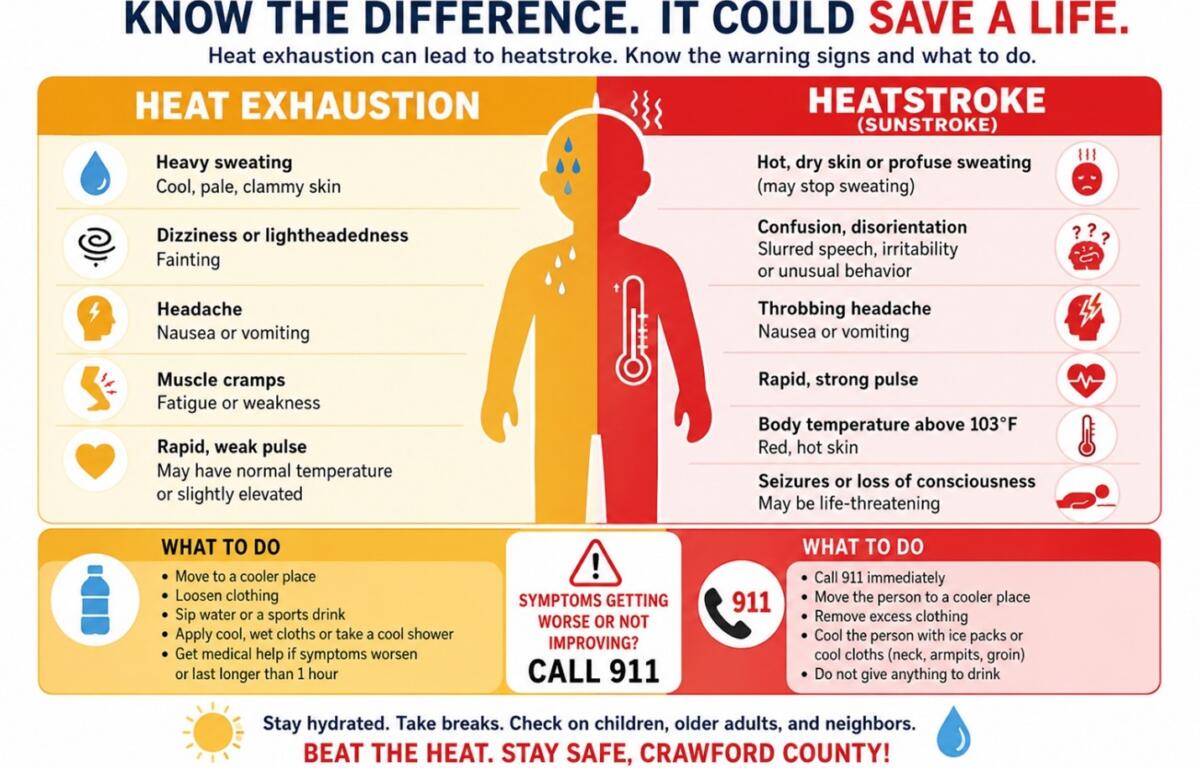
Understanding Heat Exhaustion vs. Heatstroke
Heat Exhaustion
Heat exhaustion occurs when the body loses too much fluid and salt through sweating.
Symptoms in children may include:
- Heavy sweating
- Pale or clammy skin
- Fatigue or unusual sleepiness
- Irritability
- Headache
- Nausea or vomiting
- Muscle cramps
- Dizziness
Move the child to a cool location immediately and provide fluids.
Heatstroke (Sunstroke)
Heatstroke is a life-threatening emergency that occurs when the body can no longer cool itself.
Warning signs may include:
- Body temperature above 103°F
- Red, hot skin
- Confusion or unusual behavior
- Rapid breathing
- Seizures
- Loss of consciousness
- Lack of sweating despite heat
Call 911 immediately if a child shows signs of heatstroke.
Never Leave a Child in a Vehicle
One of the most dangerous situations for children during summer is being left in a parked vehicle.
Even when outdoor temperatures seem mild, the inside of a car can heat up by 20 degrees in just 10 minutes. Cracking the windows does not provide enough protection. Children’s body temperatures rise three to five times faster than adults.
To prevent tragedy:
- Always check the back seat before locking your vehicle
- Place a purse, phone, or work badge in the back seat as a reminder
- Keep vehicles locked when parked
- Teach children never to play inside vehicles
Tips to Keep Children Safe During Hot Weather
Keep Children Hydrated
Offer water frequently, even before children say they are thirsty. Babies under 6 months should continue regular breast milk or formula feedings. Older infants and toddlers may need extra fluids during hot weather.
Dress Children Appropriately
Choose lightweight, light-colored, loose-fitting clothing and wide-brimmed hats when outdoors.
Limit Outdoor Activity During Peak Heat
Avoid strenuous outdoor play between noon and 4 p.m. when temperatures and UV exposure are highest.
Use Shade and Cooling Areas
Take frequent breaks indoors or in shaded areas. Splash pads, libraries, shopping centers, and community cooling centers can provide relief during extreme heat.
Protect Babies in Strollers
Never drape blankets over strollers, as this traps heat and reduces airflow. Use stroller shades designed for ventilation and monitor babies closely for overheating.
Check Playground Equipment
Metal slides, swings, and rubber surfaces can become dangerously hot and cause burns. Test surfaces with your hand before allowing children to play.
Outdoor Sports and Summer Activities
Children participating in sports camps, baseball, soccer, marching band, or outdoor recreation in Crawford County should take additional precautions during heat advisories.
Parents and coaches should:
- Schedule practices during cooler morning or evening hours
- Ensure regular water breaks
- Watch for early signs of heat illness
- Allow children to rest immediately if symptoms occur
What Parents Should Do in an Emergency
If a child appears overheated:
- Move them to a cool or air-conditioned area
- Remove excess clothing
- Offer cool fluids if awake and alert
- Apply cool cloths to the skin
- Call 911 immediately if symptoms worsen or signs of heatstroke develop
A Message for Crawford County Families
Summer should be a season of fun, not tragedy. By recognizing the warning signs of heat illness and taking preventive steps, parents and caregivers can help keep children safe during periods of extreme heat. Parents are encouraged to monitor local weather forecasts and heat advisories throughout the summer months and check on family members, neighbors, and childcare providers to ensure children stay protected.