


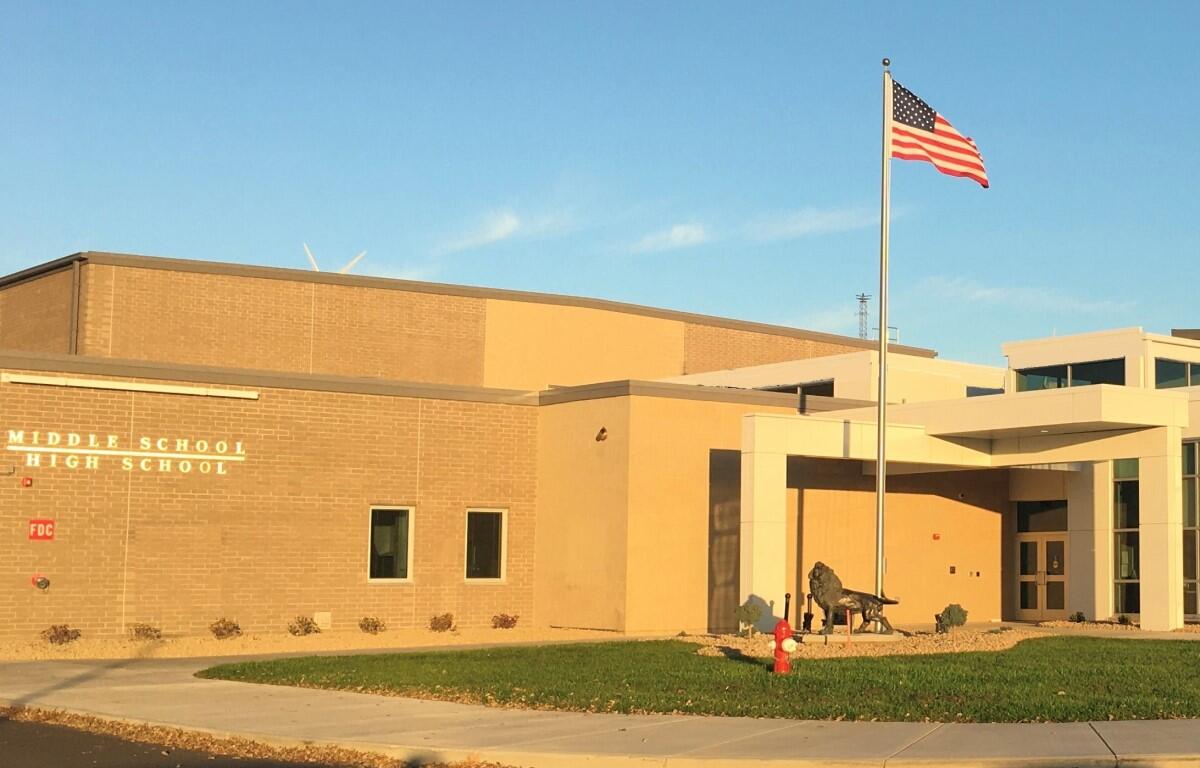

BUCYRUS, OH (CRAWFORD COUNTY NOW) — After honoring cafeteria staff for earning a Superior Food Safety Award, the Wynford Board of Education heard a wave of public concerns at the April meeting over financial transparency, staffing reductions, and administrative decision‑making, setting the tone for a meeting that later included the district’s performance audit and significant personnel cuts.
The meeting opened with recognition of Kathy Smock and the middle and high school cafeteria staff, who were commended for recording zero food‑safety violations throughout 2025.
Public comment followed. Resident Brooke Cooper said the district’s deficit “was foreseen and on track for derailment since 2022,” despite public claims that the issue surfaced only in the most recent five‑year forecast. She cited the state auditor’s conclusion that Wynford had not historically made decisions that effectively reduced deficit spending and questioned why recommendations for administrative cuts — totaling about $184,000 — had not been pursued. Cooper also noted that aligning employer insurance contributions with regional norms could save an estimated $396,000.
Elementary librarian Marisol Ulmer, who has served the district since 2005, warned that eliminating her position would harm student literacy, graduation readiness, and technological fluency. She described her work overseeing reading curricula, iReady programs, the library catalog, and fundraising efforts that have brought in $20,000 for books, furniture, and student support. “I’ve stayed loyal to Wynford for over two decades because I love my job,” she said, urging the district to consider the long‑term academic impact of cutting the library program.
Levy committee member Darlene Eichorn offered cost‑saving alternatives aimed at preserving classroom staff. She recommended analyzing whether a single K–12 bus route could reduce transportation costs, raising student fees from $8 to $50, an amount more consistent with nearby districts, evaluating pay‑to‑participate fees for athletics, and comparing the cost of outsourcing payroll or accounts payable services with current administrative spending.
Another committee representative, Rose Hartschuh, outlined the Wynford for Kids group’s efforts to promote the levy, saying volunteers have met multiple times a month since December and raised about $7,200 for outreach materials, including yard signs, banners, shirts, and nearly 2,800 mailers.
The meeting also included a statement read by Chad Gebhardt on behalf of a community member, alleging issues of integrity and transparency within the administration and certain board members. The statement questioned whether High School Principal Julie Miller or board members instructed Athletic Director Cyle Skidmore to tell coach Adam Guinther his position was safe before reversing course; whether Miller wrote and asked Michael Powers to sign a letter of intent for the coaching job; whether administrators told residents that Powers might sue the district if he was not selected; and whether performance reviews were backdated, including whether the athletic director completed his own review as head football coach. The statement argued that the situation was mishandled at a critical time, with a levy on the ballot.
After public comment concluded, the board voted to table two supplemental‑contract items.
Superintendent Trisler then presented the state performance audit. He noted that 210 of Ohio’s 611 school districts levy a school income tax. In contrast, Wynford does not, and Wynford’s effective tax millage remains the lowest among its local peer districts, including Colonel Crawford and Buckeye Central. The district’s primary peer group — those similar in enrollment, finances, and staffing — includes Northmor, Fredericktown, and Carey.
The audit reported that Wynford spends about $500,000 annually on extracurricular activities, with roughly $299,000 coming from the general fund. It recommended exploring pay‑to‑play fees, increased admissions, additional booster support, reductions in supplemental salaries, or program eliminations. Trisler said admissions cannot be raised because conference rules set those prices, booster support is voluntary and supplemental salaries are part of a negotiated agreement that cannot be reopened until next spring. That leaves reducing coaches or eliminating programs as the only audit‑aligned options.
The audit also suggested reducing one building‑level administrator, cutting half of a building‑level secretary position, and eliminating one K–8 specials teacher. Trisler said that if the levy fails, he would recommend cutting one music position, leaving two instead of three. He added that Wynford already operates with 3⅓ fewer K–12 general education teachers and 3.5 fewer custodial, maintenance, and grounds staff than its primary peers. A salary step freeze was ruled out because Wynford teachers are already paid below peer averages. The district has cut more than $750,000 from its operating budget over the past two years and is on pace to save $450,000 next year.
Following the audit presentation, the board approved the elimination of two teaching positions and two support aide positions, including the elementary librarian and computer aide, effectively ending the elementary library and computer programs for next year. The board also approved the 2026 graduation list and accepted a $35,650 grant from Upper’s Winter Fantasy of Lights to purchase new band uniforms.
At the close of the meeting, board member Kristie Chandler acknowledged the weight of the decisions. “These decisions that we are making and are facing are incredibly difficult. They impact real people; they impact students,” she said, noting that her own daughter will lose access to art, library, and computer lab next year. Chandler said her priority in any future recommendations will be balancing student impact with the district’s responsibility to reduce deficit spending. “If we find ourselves considering further reductions after the levy in May, the impact on students’ needs to be our first priority,” she said. She added that providing clear reasoning and data behind each decision is essential to helping staff and the community understand how those choices are made.
Crawford County Now later requested comment on the head boys basketball coaching situation. Trisler said the district is required to consider a certified teacher who recently expressed interest in the position. “By our teacher’s contract and state law, we have to give preference to certified employees who are qualified and express an interest in those positions,” he said. “As of right now, Coach Guinther has not been nonrenewed, but we are working through the process on what this looks like when you have a certified staff member, certified teacher, that expresses an interest in the position, and that we have to consider them for that position.”
Trisler also addressed the upcoming levy, saying the district is focused on informing residents about its financial condition. “We would have been on the ballot in November had the legislators not started entertaining property tax reform,” he said. He noted that Wynford has not received new operating money in 23 years. “During that time, whether it’s your household, or whether it’s your business or your farm, costs continue to rise,” he said. “For us to have the same and keep the programming and opportunities and staffing for students, it’s crucial that we seek new money. If the new money doesn’t come through, we’re going to have changes in staffing opportunities for students and programming because we can’t run the same school district that we’ve been running for the past 23 years without new money.”