


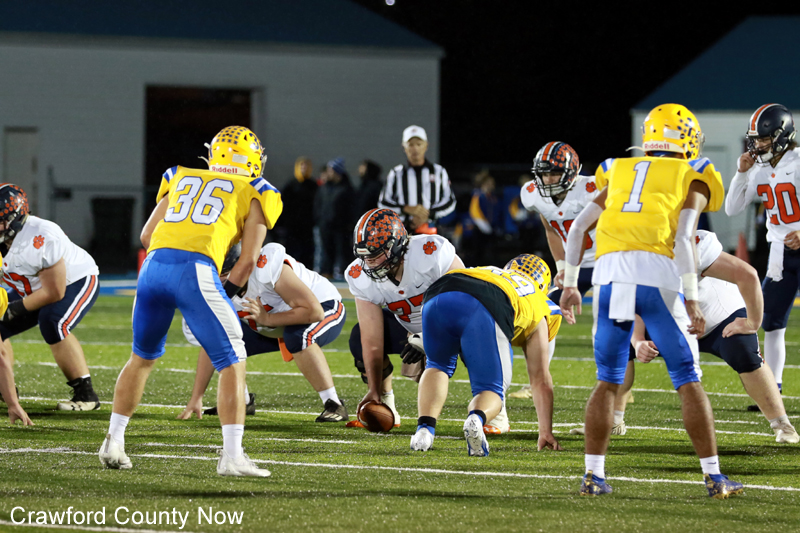

There was widespread reaction from coaches, media, and the public in general when the Ohio High School Athletic Association announced in the summer that the football playoffs would expand to 16 teams per region.
A large part of the response was negative. Why change a good thing?
The reasons varied as to the opposition. One contingent labeled expansion a “money grab” by the OHSAA. It is true that the body overseeing Ohio high school athletics does make a good portion of its operating capital from tournaments. However, is this expansion at the expense of any person or school?
Some of the push-back in the coaching sector came from programs that are in the playoffs on a regular basis. So, for them, expansion may have seemed unnecessary.
Football is the only sport in Ohio with a post-season tournament that doesn’t include all eligible schools. No one questions whether a 1-21 basketball team has “earned” the right to play in the hoops’ tournament. Why the recoil for making the regions 16 teams instead of eight or 12? There are still teams left out.
Some may have feared games with lopsided scores, assuming no one gains in such mismatches. But coaches and administrations have the option of not participating in the playoff if that is their fear. Many of these programs have never been to a playoff or have made only a few appearances.
After the first week under the new format, were the concerns warranted or were the changes beneficial?
There were 30 upsets (by seed) in the 28 regions over seven divisions. Only nine regions — less than one third — had the top eight seeds advance.
That means 30 teams that wouldn’t have qualified if the old format of eight teams were still in use “earned’ their way into the top eight by being allowed to play.
Of those 30, ten would not have made it even if the modified 12-team format — used last year due to the COVID-19 situation — had been the setup. We saw upsets like a 16 seed beating a one seed in Division IV, Region 14 (Milan Edison over Bellevue, 23-22).
In Division III, Region 12, No. 15 Kettering Alter beat No. 2 Monroe, 20-14. There were four 14 seeds that beat three seeds and four 13 seeds that beat four seeds across all divisions. There were six 12 seeds that defeated five seeds. The rest were 11s over 6s, 10s over 7s and 9s over 8s.
To be sure, there were some lopsided scores. But the largest margin of victory was Mechanicsburg’s 59-0 shutout of St. Bernard-Elmwood Place in Division VI, Region 24. There were others with over a 50-point margin. But many of those losing teams had experienced similar games during the regular season.
Of course, a high percentage of top eight seeds did advance in all the regions. But 30 teams are playing this weekend that wouldn’t be if not for expansion.
And even for the rest of the additional 224 teams — there were close games played in a losing effort — the seniors got to suit up for their high school one last time. That’s a win in my book.
The naysayers may contend that the percentage that advanced was small — 30 of 224 is only 13 percent. But even for those that lost, the players played, the coaches coached, and the fans cheered one more time.
The jury is obviously still out with the relatively small sample size. But, what if one or more of the 30 win again this week, perhaps reaching the regional finals or beyond? Those would be a true Cinderella stories.
The possibility exists because of expansion.