



By Andrew Walsh
awalsh@wbcowqel.com
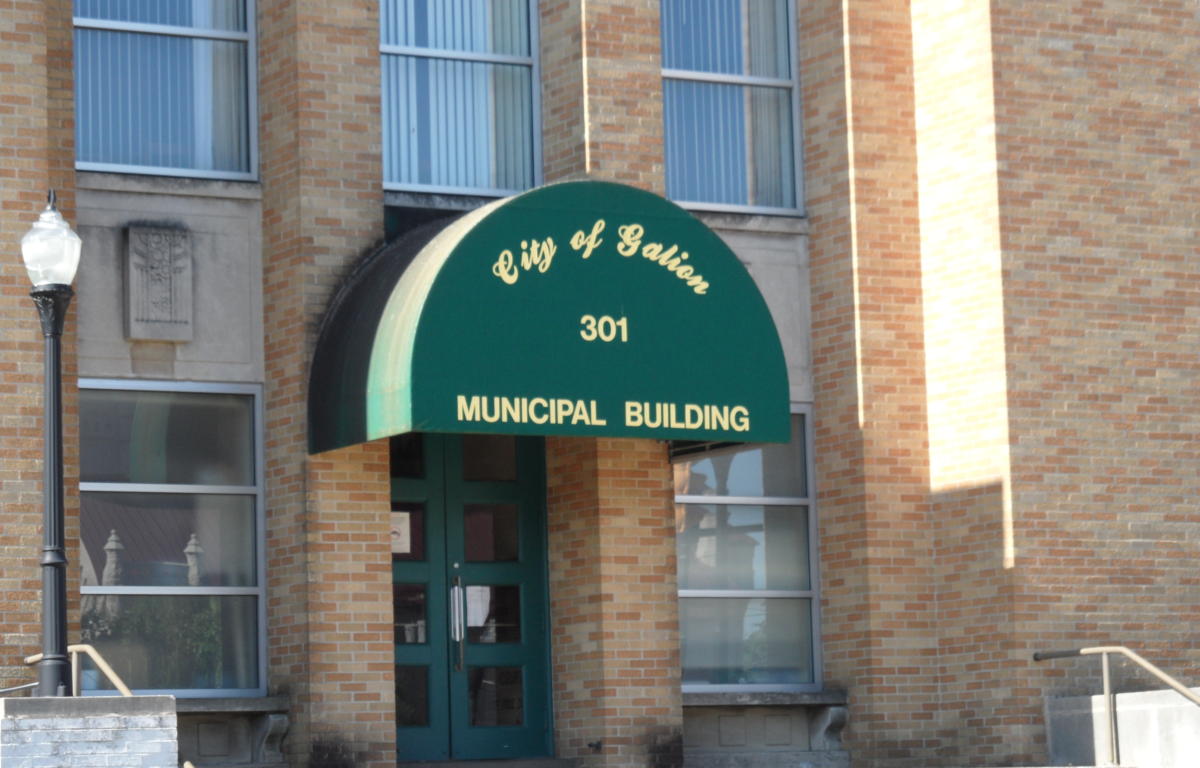
The much discussed position of public information officer got the final clearance to move forward in legislation at Tuesday’s Galion City Council meeting.
Shirley Clark confirmed that it was being offered as a part-time position, not to exceed 35 hours per week and at $13.50 per hour. Susan Bean persisted with her protestations, although there was an air of resignation about her as it was pretty clear the ordinance would go through.
“I find this extremely irresponsible,” Bean said before the vote.
Ordinance 2015-77 to create the position, and Ordinance 2015-81 to fund the position both passed on six to one votes.
Prior to the legislative portion of the meeting was an opportunity for public input, but that didn’t happen until there was a word of warning.
“Last meeting was a total embarrassment to the whole city of Galion,” Council President Carl Watt said to begin Tuesday night’s meeting. “We won’t let it get out of hand again.”
RELATED CONTENT: More clashes at Galion City Council meeting
Watt’s admonition was the precursor to another intense round of public input. While Watt was true to his word, and things never truly got out of hand, there were still pointed discussion between parties.
Roberta Wade made good on her promise of, “I’ll be back,” from the previous meeting, and was on hand to collect the public record request she made last time out. The public record request she had made was for the power cost adjustment calculations made beginning in 2005.
Law Director Thomas Palmer answered Wade by reiterating that multiple requests, by multiple people, have been made on this subject, and the city’s answer has always been consistent. Auditor Brian Treisch distributed the spreadsheet containing the formula that computed the calculation, but the city does not have each individual calculation on file. Also, as to how the calculation was applied, the ordinance stated that this was up to the discretion of the city manager through all these calculations.
Wade was unsatisfied with this answer. “I would expect the people to be upset.” She continued by decrying the, “the fraud being committed on the electric payers.”
Palmer responded by reiterating his points, points that have been brought up in, “so many meetings, so many public sessions,” that that calculations were a factor in the decision making process, and the city manager had a great amount of discretion to apply.
Thomas Fellner took the opportunity to wade in at this point, reminding Wade that much of the time period in question was concurrent with her time as a member of council.
“There was never once specifically, that I recall, Mrs. Wade bringing up the PCA.”
Mike Richart underscored this point, “She was chair of the finance committee! She should have had direct oversight.” Richart continued with, “Was she sitting on Council and twiddling her thumbs?”
Wade defended herself by claiming that the PCA was, “All being done administratively,” and “All being done to the detriment of the payers.” She stated that this issue only came to her attention as Law Director in 2013.
Shortly after public comment concluded, Wade and Paula Durbin, who have been the principal adversaries to the sitting council and administration, left the meeting. This caused Fellner to offer up as his closing comments at the end of the meeting,
“I’d just like to point out, the Treasurer once again left early, as did the group that doesn’t have the courtesy to stay.”
“The public needs to know that we are willing to discuss everything and make an honest effort, and to be called names, that we’re liars, is very offensive. I hope the voters use their power and their right to make the right call on Tuesday.”
Auditor Brian Treisch also expressed his dismay at Durbin’s continual refusal to attend a full meeting, or any portion of a meeting at all for that matter. Treisch started by saying, “I’ve had to sit through a bunch of interesting comments about my character,” and continued by pointing out that Durbin is required to attend meetings if ordained by council. “You did that at your very first meeting.”
The other big piece of legislation has to do with how the city will be collecting income taxes in the upcoming years. Fellner introduced the issue, and Treisch and Palmer helped explain.
“It is a detailed ordinance amending the way we collect taxes. It is not numbers per se. It has been passed by the Ohio House and Senate. I urge the citizens to come forward, get a copy, and read it.”
Palmer corroborated the detailed aspect of the ordinance, stating that it is 49 pages long. Detailed information was a bit scant as this has only recently been handed down by Columbus, and the City has a compressed time frame to get it through. It needs to be in place by Jan. 1 for the city to continue collecting income taxes. It is also something of a mandate, there is not much choice that the city has in the arrangement. Despite that last part, the level of detail involved means it will get a full three readings before going into effect.