



By Krystal Smalley
ksmalley@wbcowqel.com
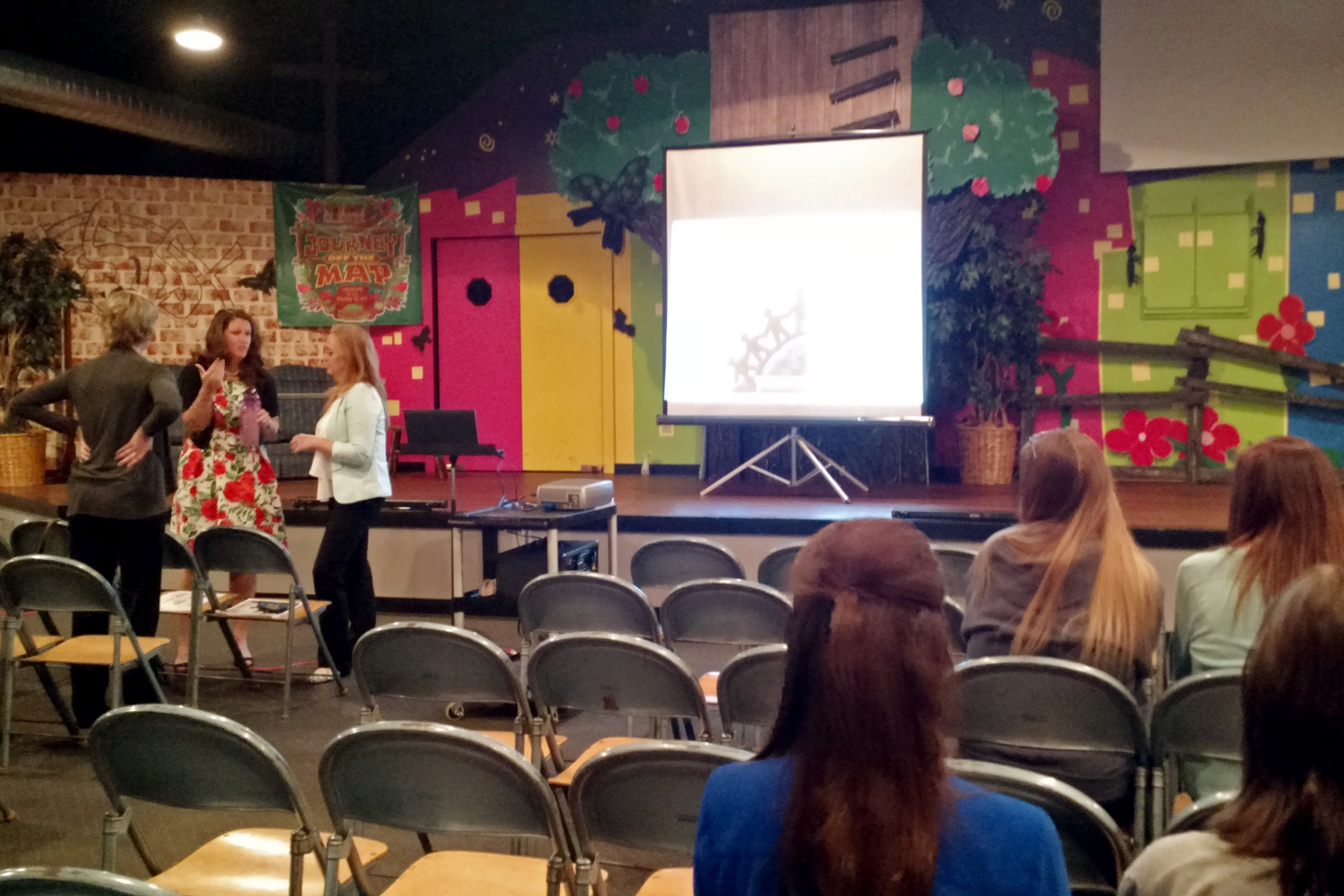
It was validation day for the Crawford County Health Partners: the county-wide community health assessment was presented to the community Monday morning.
Britney Ward of the Hospital Council of Northwest Ohio presented a review of the findings, which included not only adult county-wide data as released at a draft meeting, but also data specific to the city of Galion and youth data collected from the six county schools. She credited the Crawford County Health Partners, which consists of Crawford County Public Health, Galion City Health Department, and other entities throughout the county, for coming together to gather the data.
Surveys were sent out to 1,200 adults living in the county and 433 surveys were returned with results, enough to meet the 380 generalization requirement. Additional surveys were also sent to Galion residents. The percentages compiled have a five percent margin of error.
Figures of note included 28 percent of Crawford County residents making less than $25,000 in annual income and 12 percent being uninsured. Seventy-five percent of county residents are overweight or obese, compared to 80 percent of Galionites.
When it came to tobacco users, 24 percent smoked cigarettes while nine percent used e-cigarettes, the highest number Ward had seen for adults. Thirteen percent of individuals were frequent drinkers while 19 percent were binge drinkers. Ward noted that those with higher incomes often drank more.
As far as drug use, something Crawford County is no stranger to, the numbers were most likely vastly under reported, Ward explained. She stated that if a survey was sent to a drug user, they might not be forthcoming with information. Oftentimes, however, there is no available address for someone who is addicted.
According to the data numbers, 10 percent of respondents who said to have used drugs admitted to using marijuana. Only one percent admitted to using recreational drugs such as cocaine, heroin, LSD, or K2. Ten percent claimed to have misused prescription drugs, a number that appeared higher in females than males.
“There’s a lot of work that can be done around this area – in this community and every community,” Ward stated. “Unfortunately, this survey is not going to give us the data that we need. You’ve literally got to talk to the coroner, got to talk to all these other folks, the sheriff’s office, whomever.”
In Galion, respondents were more likely to rate their physical health as “not good,” less likely to be a binge drinker, and had a higher percentage of having high blood pressure compared to the county (50 percent vs 39 percent).
The ADAMH Board of Marion and Crawford counties provided the youth data for the survey. Collected from the county schools over a period of three years, the survey questioned students in grades six through 12 and compared it to the most recent data (2013) provided by the state, which only focused on high school-aged students. Overall, the numbers appeared lower than the state rates, though Director of ADAMH Board Jody Demo-Hodgins said the numbers varied by school the last two years of the survey collection.
Some percentages of note are: 30 percent of student respondents in grades nine through 12 in the county claimed to have tried cigarettes versus the 52 percent compiled by the state, 21 percent of county students drank within the last 30 days, 10 percent have used marijuana while two percent admitted to meth or heroin use. A notable 11 percent said they had been given drugs on school property.
“It’s pretty rewarding to see the collaboration come together and finalized,” said Kate Siefert, Administrator for Crawford County Public Health.
Siefert believed the assessment covered a variety of topics that various organizations – from the two health departments in the county to Avita Health System, ADAMH Board, and other groups – can take and apply in their respective fields.
“They’ll all have a piece they can focus on, and can feel good about actually having data they can tackle and show the community we can progress, we can improve – and even show off in some places,” she added. “It kind of gives merit and value to each of these partnering agencies.”
The data written in black and white does not only benefit health officials or areas closely related to health.
“One of the best benefits for having these community-wide health assessments with all this partnering and collaboration,” Siefert said, “is we open up the avenue for so many non-profits and so many other agencies to apply for grants based on locally driven data.”
Siefert compared collaboration in Crawford County to what Sandusky County’s last assessment was able to do for Fremont: it brought in an additional $3 million based on organizations and communities applying for grants using the community health assessment data.
“This is data that no one person or no one entity owns,” Siefert stressed. “It’s provided for the county to use. They can download it from any of the sites provided, and they can use pieces, parts, the whole thing. They can run with it and go get that funding for Crawford County.”
After reviewing pieces of the data presented, those in attendance listed a variety of items they were most surprised about, most notably the high obesity rate within the county. Other areas of surprise were the high percentage of people who said they found access to mental health care, the low percentage of women who did not set prenatal appointments, the percentage of children that are hungry, and the youth drug rates.
They also discussed programs that could be offered in the county to improve numbers in some areas, like re-implementing the Welcome Home visits for new mothers, focusing on prenatal visits, establishing anti-bullying and needle exchange programs, and creating Stable Cradle programs for opiate-addicted mothers.
The community members and health officials in attendance also made a list of items they would like to see in the next assessment, such as family structures, elderly care, water data, homelessness, and better data on drug use and youths.
The full report can be found at the following websites: crawfordhealth.com, galionhealth.org, avitahealth.org, and http://www.hcno.org/community/reports.html. The Crawford County Public Health partners are also seeking public comment on the health assessment. The direct link to public comment can be accessed at: https://www.surveymonkey.com/r/CHA_Community_Input.
A community health plan meeting will be held from 10 a.m. to 2 p.m. on May 31 at Galion Community Hospital.
RELATED CONTENT: County Health Partners get first look at health assessment | Healthcare Partners need funds, ready to finalize questionnaire | Community Health Assessment survey discussed for county | County Health Partners begin planning process