



Video: Tad Fannin Marketing Media
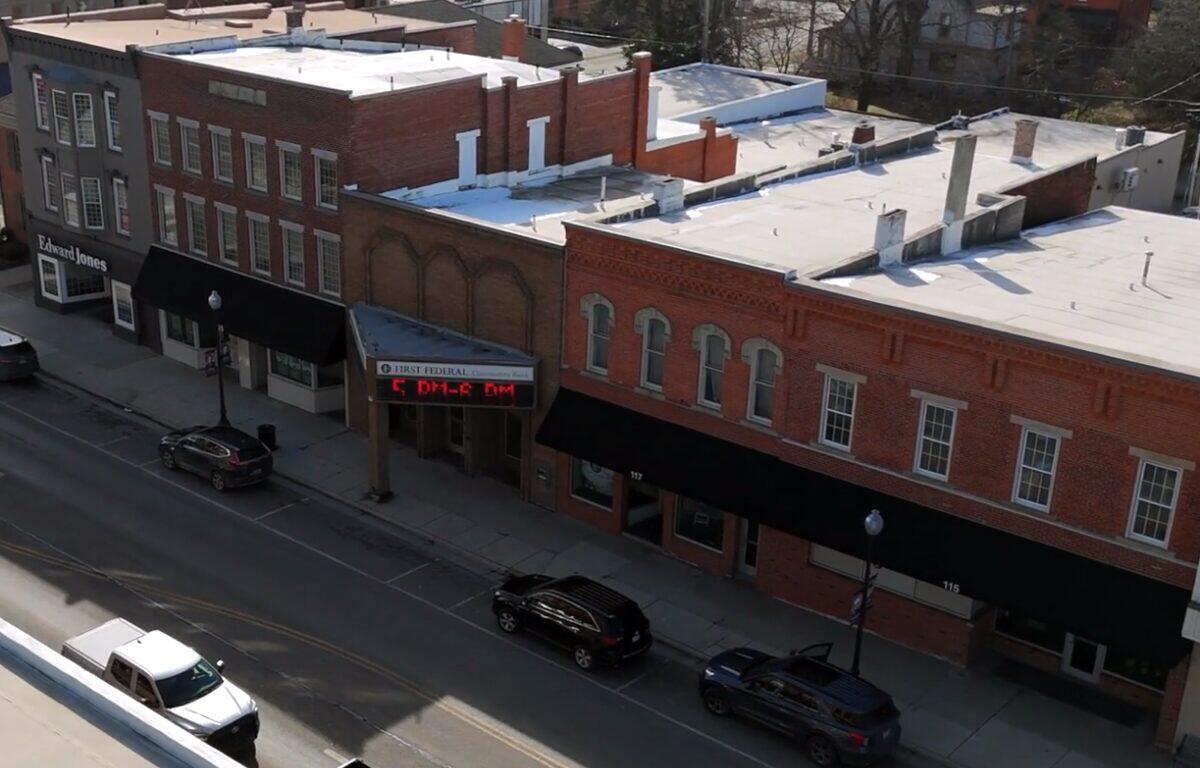
Most people experience these buildings only from the sidewalk.
The storefronts are familiar …but what’s above them is something few people have ever seen.
According to the zoning office, the second stories of most of these downtown buildings were primarily zoned as residential.
That’s reflected in what you’ll see throughout this walkthrough, multiple rooms, kitchens, bathrooms, furnaces, sinks, and in some cases, stoves.
This video offers a straightforward look at the upstairs spaces in buildings 115, 117, 119, and 125, shown as they exist today.
115 — Upstairs
We begin at 115, where access to the second floor was gained from inside the building.
Historically, J. E. Kern & Bro. operated the Rexall Drug Store on the first floor, with business activity extending across both 115 and 117.
Above Rexall, the second story functioned as residential and professional space.
Dr. H. E. Burnett, a dentist, operated an office overlooking Sandusky Avenue from this level.
The layout reflects that mixed residential use, with separate rooms, plumbing fixtures, and utilities that support everyday living.
117 — Upstairs
At 117, the upstairs space continues that residential pattern.
Multiple rooms and evidence of kitchens and bathrooms suggest this level was designed for living space rather than public use.
Over time, the first floor housed businesses like Kiess Pharmacy, while nearby storefronts served everyday household needs.
The upper floors, however, remained largely private, changing as tenants came and went.
Like many second stories downtown, access was limited, and signage was minimal or nonexistent.
119 — Upstairs
The second floor of 119 stands out slightly.
Although it was also zoned residential, records show that professional offices operated here over time.
Tenants included Vance McGlaughlin, Realtor, Charles R. Campbell, CPA, and Sears Realty.
These uses help explain why this space shows more defined layouts and some interior signage.
Even so, residential features remain part of the structure, reflecting how flexible these upper floors once were.
125 — Upstairs
At 125, the residential design is especially clear.
The second floor includes multiple rooms, kitchen and bathroom areas, utility connections, and fixtures consistent with longterm living space.
Like many of these upstairs areas, it wasn’t meant to be seen from the street or accessed by the public, which is why curiosity has lingered for so long.
As you move through these spaces, each one tells the same story in a slightly different way.
The second floors were functional, private, and largely residential, built to support daily life above active storefronts.
What they all share is a long period of being unseen.
These spaces exist above places people pass every day, without most realizing what’s there.
This walkthrough isn’t about restoring or reimagining these areas.
It’s simply an opportunity to see them, as they are, and understand how they were originally used.