


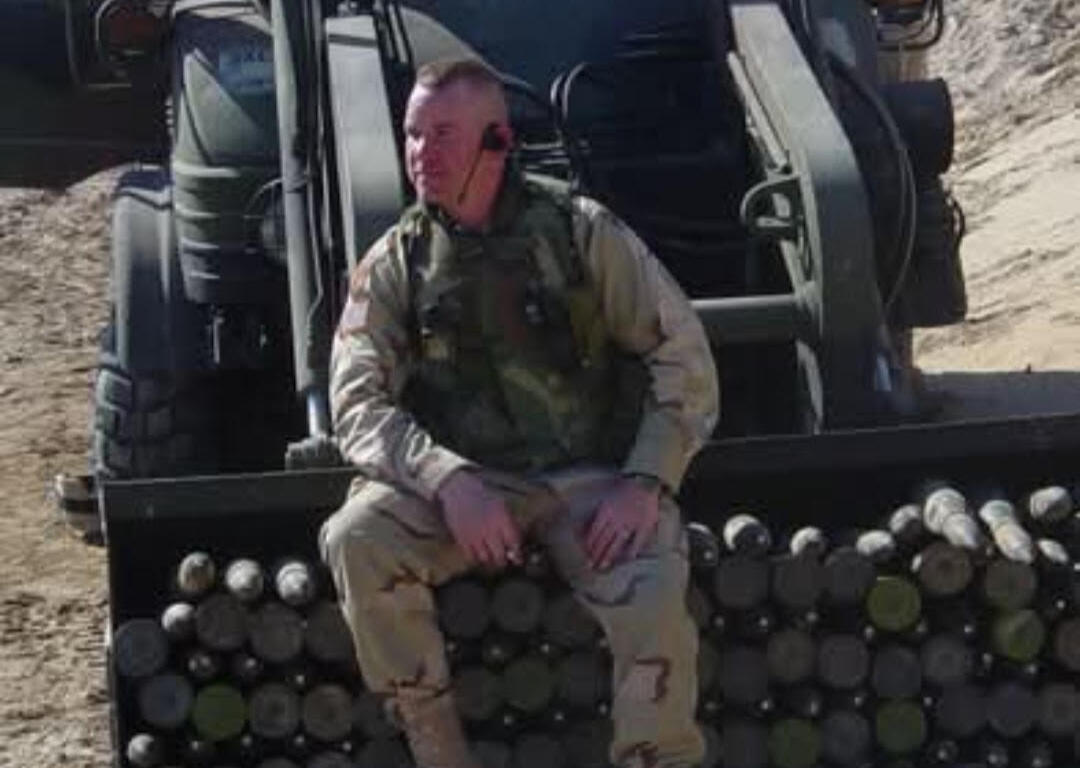

SHELBY, OH (CRAWFORD COUNTY NOW) — Back in 1990, a young Stephen Cline was working at Wendy’s and was unable to afford college. In his search for structure and stability, he enlisted in the Marine Corps during Operation Desert Storm.
After completing Marine Corps Recruit Training at Parris Island, South Carolina, Cline attended combat engineer training at Courthouse Bay, part of Marine Corps Base Camp Lejeune near Jacksonville, North Carolina.
While in the Marine Corps, his duty stations included Okinawa, Japan, and Quantico, Virginia, where he spent three years assisting with FBI agent training and range maintenance.
Cline said the Marines fostered a sense of camaraderie he had not experienced elsewhere. He described the branch as a brotherhood where leaders viewed service members as individuals rather than a “color on a chart.”
In 1996, Cline left the Marines during a peacetime period following Operation Desert Storm. He said he found himself standing around or mopping floors rather than performing the active engineering work he had joined to do.
About five years later, Cline joined the Army following the Sept. 11 terrorist attacks.
While he initially wanted to rejoin the Marines, Cline had been out too long to meet their re-entry requirements, so he chose the Army, where he would not have to complete basic training again.
Once in the Army, he joined a communications unit in South Carolina before transferring to the Army unit based in Norwalk, Ohio.
While attached to the unit, Cline traveled to Panama for operational training. During the return trip, his first sergeant received notice that the unit would be deploying to Iraq.
Rather than waiting to be activated, Cline asked to be placed on the roster, launching the first of what would become three voluntary combat tours.
During his first tour, Cline deployed with a bridging company. During his second, he served with an engineering company. On his third deployment, he served with the Norwalk-based heavy equipment unit, focusing primarily on roadside improvised explosive device, or IED, detection and clearance operations to protect Army troops.
On his first tour, Cline arrived in Iraq before factory-armored Humvees became common.
Cline recalled that troops often found scrap steel and attached it to unarmored vehicles for improvised protection. He said soldiers also fabricated slanted metal roofs over dump truck beds so hand grenades thrown from overpasses would roll off rather than land inside the vehicles.
Cline said urban combat equipment and tactics adopted from Israeli military operations were essential in helping troops transition from traditional training to urban operations in Iraq.
Beyond IED clearance, his missions included rebuilding infrastructure, conducting direct-entry operations, constructing detention facilities, and providing prison security.
While deployed, Cline expressed frustration with changing standard operating procedures and rules of engagement. He recalled that Humvees initially carried warnings reading, “Stay back 50 feet or you’ll be shot,” which were later changed to “Please be patient, American convoy ahead.”
Cline also recalled restrictions against firing on vehicles cutting into convoys and what he described as prohibitions against displaying American flags on military vehicles.
After 11 years in the Army and six years in the Marine Corps, Cline retired at the rank of sergeant, E-5.
While frustrated with some of the political changes he witnessed throughout his military career, Cline said he does not regret serving.
“I don’t regret it at all. If I could get back in today, I would. It’s just who I am, the way I am built,” Cline said.
Upon returning to civilian life, Cline became a single father raising two young sons while operating a small construction company.
When the COVID-19 pandemic struck, however, his business came to a sudden halt as many homeowners became reluctant to allow contractors into their homes.
Struggling with financial hardship and post-traumatic stress disorder, or PTSD, Cline relied heavily on an emotional support dog, a pit bull mix named Magnus.
When Magnus developed a severe skin condition requiring thousands of dollars in specialized veterinary treatment, Cline found himself facing an impossible choice between providing for his two sons and paying for his dog’s medical care.
He researched every option he could find. The only assistance available was a veterinary financing credit card, which he said was not a realistic solution given his financial circumstances.
Eventually, he made the difficult decision to euthanize Magnus.
Guided by a lesson from his father, “If you see a problem, come up with three solutions before you bring it to somebody’s attention,” Cline began looking for ways to help other veterans avoid the situation he had faced.
Cline did just that and created Veterans With Pets.
The organization’s key objectives are to fund urgent veterinary care to prevent financial hardship in veterans’ homes, provide free pet food and supplies to veterans, fully cover adoption fees at participating shelters, and offer pop-up clinic vouchers. Through that program, Cline will occasionally set up outside Tractor Supply Co. or PetSmart vaccination clinics and pay for veterans’ pet vaccinations on the spot.
At present, the Crawford County Humane Society is the organization’s participating shelter partner. Cline said there was a period when Veterans With Pets helped facilitate seven adoptions in 15 days.
Grounded in his own frustrating experiences with bureaucratic aid programs, Veterans With Pets does not require financial audits or extensive identification checks.
“If they say they’re a veteran, we just help them out,” Cline said.
Cline also plans to launch a mobile app through Veterans With Pets. The app is in Phase 3 development and is targeted for release in February or March 2027.
The app requires a one-time $10 donation for lifetime use, with no monthly charges or subscription fees.
The app will allow veterans to verify their military status directly and create a pre-verified profile that simplifies applications for emergency aid.
The app will function as a social network and marketplace focused entirely on pets, allowing users to build custom profiles for their animals, post on local community message boards, message friends, and connect with pet groomers, breeders, and other service providers.
Another planned feature is an in-network veterinary funding model.
Participating veterinary clinics would contribute $50 per month to join the network. Cline said clinics could offset the cost through voluntary customer donations, such as a $1 donation jar at the front counter. Veterans seeking assistance through the nonprofit would then be directed to those participating clinics.
One highlighted feature of the app will be an SOS button that allows users to quickly broadcast a location-based alert containing a missing pet’s photo and contact information to nearby app users.
Another planned feature is facial-recognition technology that would allow users who find a lost animal to take a photo. The system would then compare the image against the app’s database and notify the owner if a match is found.
While Cline helps as many people as possible, he said limited funding forces difficult choices.
“For every one veteran we help, we have to turn three away,” he said.
Veterans With Pets operates through a revolving account sustained largely by quarterly and annual donations from local VFW, American Legion, and AMVETS posts. According to Cline, more than 90 percent of direct aid goes directly to veterans because the nonprofit operates entirely through volunteer labor and minimal overhead.
Those interested in supporting local veterans with PTSD and helping care for their emotional support animals can donate through the Veterans With Pets donation page or through the app once it launches. Cline said he and other volunteers are also willing to meet with prospective major donors to discuss the organization’s mission, programs, and impact.
For more information about Veterans With Pets and ways to support Stephen Cline and other veterans, visit the Veterans With Pets website.
“It’s comforting seeing a lot of these veterans that are just at their wits’ end and in tears not knowing what they’re going to do, and then just being able to step in and help them out,” Cline said.